Inventing the Near Future: Inside the Quest for a $1000 General Purpose Bot
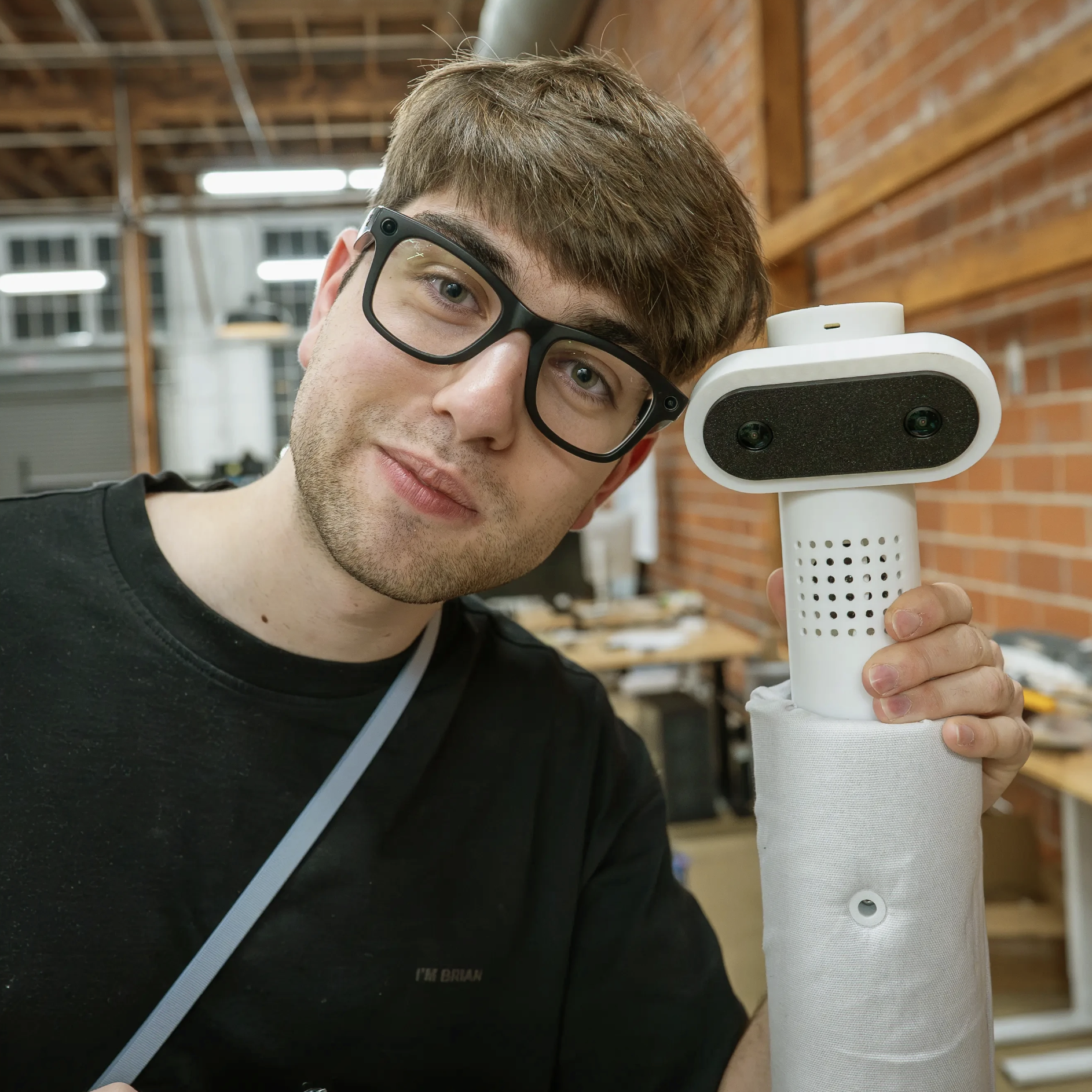
When you step into Brian Machado’s world, you quickly learn that money is less of a resource and more of a tool for acceleration. He has raised millions, worked on Uber’s self driving team as a teenager, and built prototypes that grab the attention of some of the biggest names in robotics. Yet his apartment in Waterloo was overflowing with hardware parts, 3D printers, and late rent notices rather than luxury perks or fancy office space.
The four 3D printers in his living room summed up his philosophy perfectly. Why have one printer when you can have four and run quadruple iterations at the same time. To Brian, money converted into learning is the highest possible return. Speed of iteration is the currency that matters.
That mindset followed him to San Francisco, where he now rents a 5000 square foot factory to pursue a goal that many engineers call impossible. He wants to build a general purpose robot for about $1000. Something modular. Something human-ish. Something you can hack on without years of training. He describes it as “Replit for robots.” Watching him work, it feels like LEGO Mindstorms for adults.
A typical day in his workshop feels like an expedition through other people’s inventions. He buys products to dissect them the way a chef might taste cuisines for inspiration. Retractable USB cables, consumer gadgets, and even 3D printed sneakers all become raw learning material. One day he discovered that the foam rubber used in those shoes could be repurposed for a soft modular robot shell. That insight only came because he was willing to spend money simply to learn.
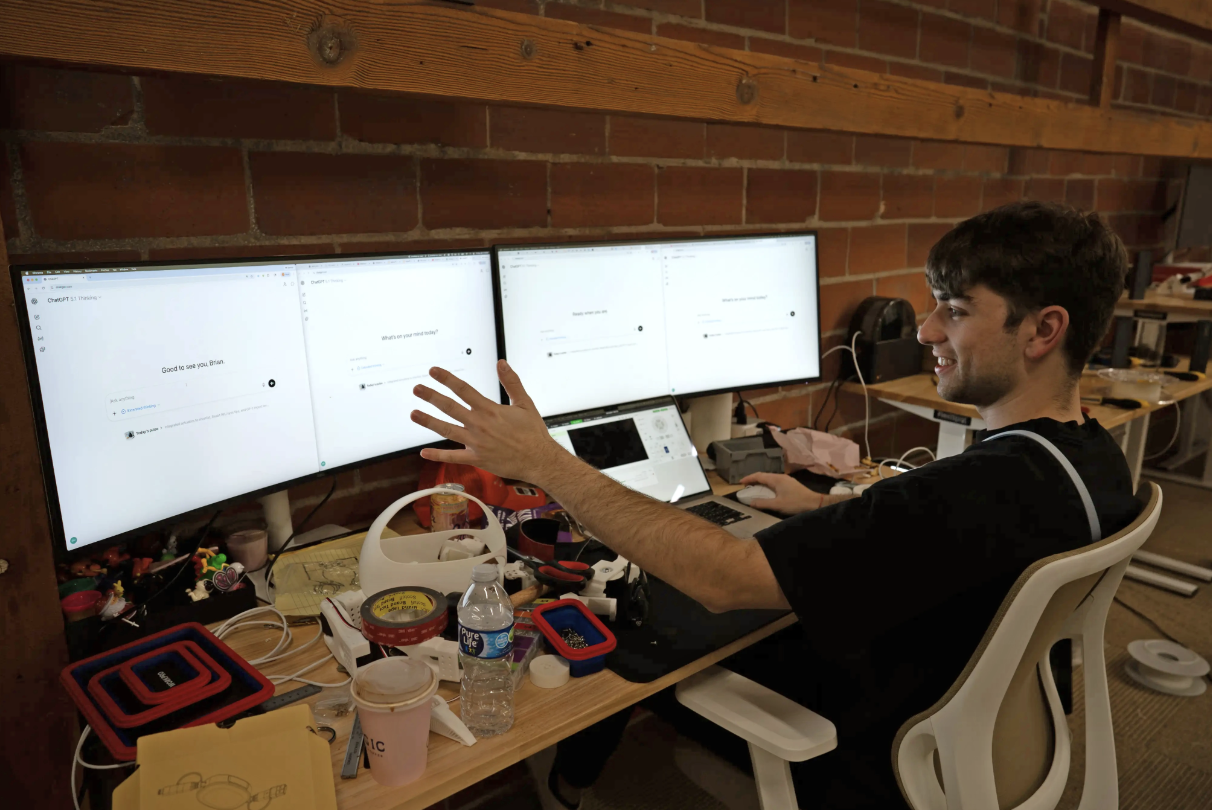
Brian is guided by a kind of intellectual compulsion. He surrounds himself with ideas, machines, and systems not because they solve a problem today but because they shape his instincts for tomorrow. He spends hundreds a month on AI platforms and developmental tools, convinced that a ten percent increase in idea velocity compounds into enormous returns over a lifetime.
That drive goes back to his belief that robotics today feels like computing before the Macintosh. Everyone chases photogenic demonstrations, but few create systems that developers can actually use. Brian compares his work to the Apple II, which was simple, limited, and life changing. He argues that general purpose robots are still missing their Apple II moment. They look futuristic but do very little in the real world and remain largely inaccessible to creators.
His solution is not to build a sleek humanoid that dazzles on stage, but to build a platform that is affordable, modifiable, and developer friendly. He wants a high school robotics kid or a hobbyist coder to get the same spark of possibility that he did. He wants a robot that can be programmed to wave, follow a person, or customize a tool attachment rather than lock users into a menu of predesigned actions.
The vision is bold, but what separates Brian is not the vision itself. It is the willingness to embrace mistakes as part of the learning process. He spent months designing a collapsible version of his robot to reduce shipping costs, only to discover that large shipping boxes were cheaper than he assumed. Many founders would bury the error. Brian pivoted on the spot and considered the lesson a victory because it improved the next version.
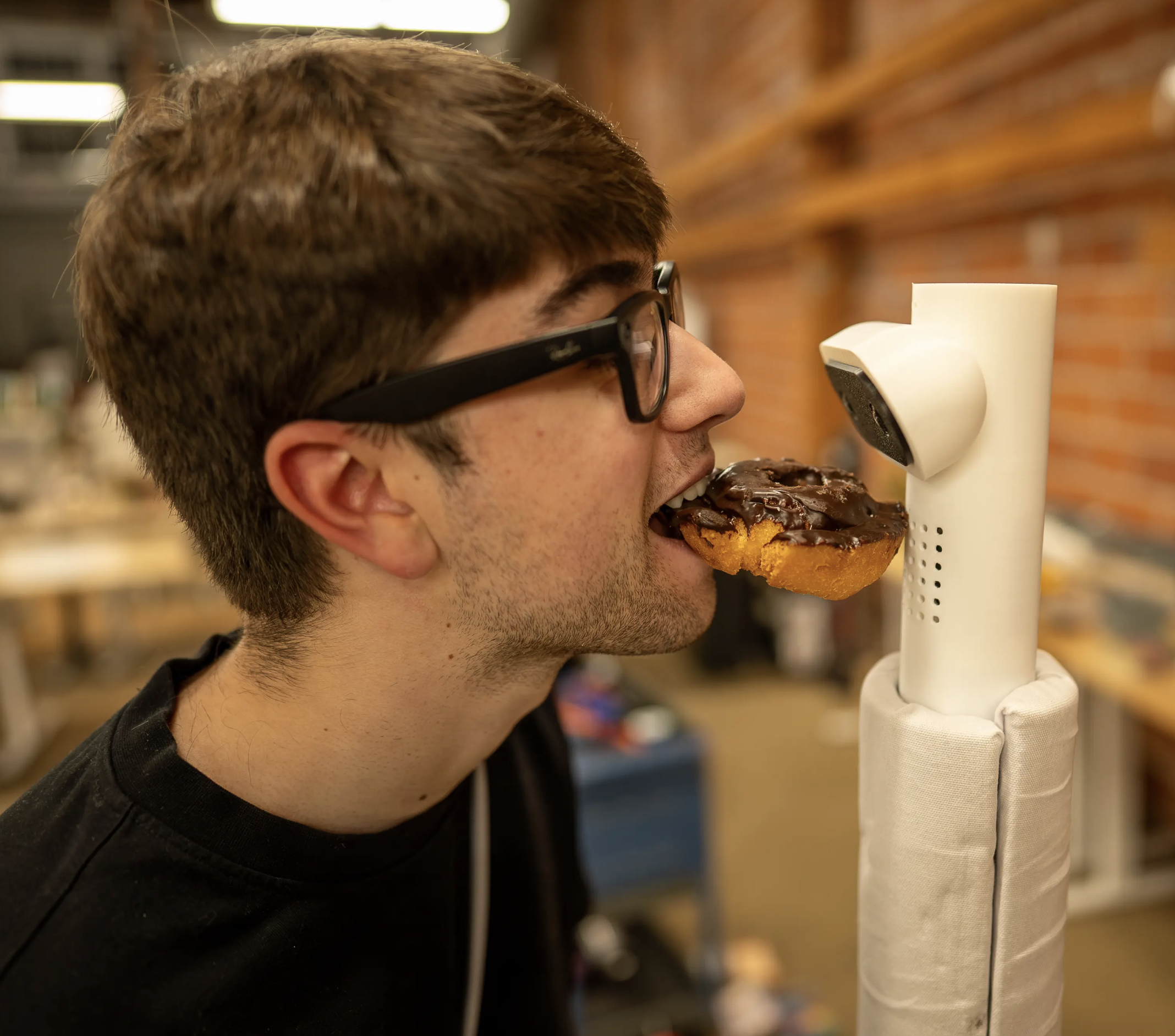
He is not romantic about failure, but he views it as data. He works fourteen hour days, sleeps on the factory floor, and has a track record that spans Uber, Google X, and Tesla. He once built a product that attracted millions of users, then shut it down because he was not passionate about it. Robotics is different for him. This is the field he will not abandon.
Behind the quirky purchases and improvisation lies a serious insight. Innovation often emerges when a single person carries context across hardware, software, electrical design, and user experience. Large teams can build polished components, but switching costs between specialists slow true breakthroughs. Brian’s value is that he has built a holistic understanding over twelve years. He can compromise where needed, optimize where it matters, and guide a product that blends accessibility with capability.
Most roboticists dream of creating machines that rival human dexterity. Brian dreams of creating machines that regular people can hack, customize, and teach new tricks. The killer application is unknown, and that unknown is the opportunity. Just as the first iPhone unlocked an ecosystem no one predicted, a cheap programmable robot could reveal use cases we cannot imagine today.
If Bracket Bot succeeds, it could be remembered as the spark that opened robotics to the developer community. If it fails, it will not be because Brian lacked passion or grit. He is too obsessed, too curious, and too committed to learning. He is building for himself first, and for the world second. That purity of motive fuels him more than any paycheck.
Spend a week with him and you either walk away thinking he is eccentric or you start to believe he might be building the future a few years early. He is trying to give the next generation the same feeling he had as a child building machines for the first time. A sense that technology is not magic, but something you can take apart, reshape, and improve.
The rest of us will know soon enough whether the $1000 general purpose robot becomes reality. If it does, the seeds were planted in that cluttered apartment, surrounded by 3D printers, children’s toys, old computers, and a belief that inspiration is worth paying for.