LG to Debut CLOiD Humanoid Robot at CES 2026, Redefining the “Housebot”
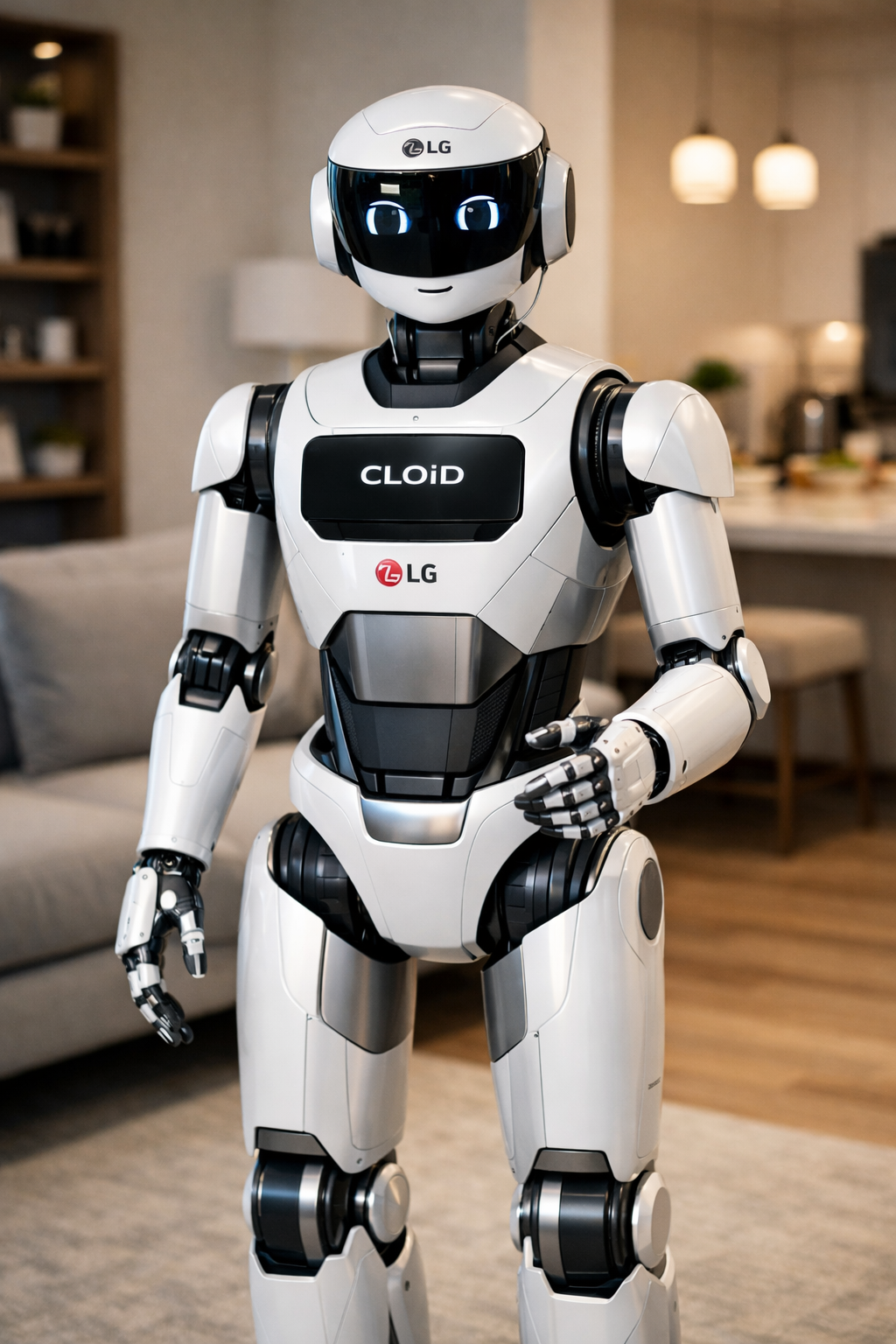
LG has not released official imagery, and the final design, features, and appearance of CLOiD Housebot may differ.
At CES 2026 in Las Vegas, LG Electronics is set to unveil one of its most ambitious consumer robotics projects yet: CLOiD, a humanoid robot designed specifically for life inside the home. The debut signals a major step toward LG’s long stated vision of a future where everyday household labor is handled by intelligent machines.
A Humanoid Built for Real Homes
CLOiD is not positioned as a novelty or a limited smart gadget. It is a fully articulated humanoid robot designed to physically interact with its environment. The robot features two arms with seven degrees of freedom each and hands with five individually actuated fingers, giving it the dexterity needed to grasp, lift, and manipulate everyday household objects. This level of fine motor control is critical for real home tasks, where environments are unpredictable and objects vary widely in shape and texture.
Rather than focusing on industrial precision or controlled settings, CLOiD is designed to operate in lived in spaces like kitchens, living rooms, and bedrooms. LG’s goal is to bridge the long standing gap between robotic capability and practical usefulness in everyday domestic life.
Intelligence That Learns the Household
At the center of CLOiD’s design is an onboard AI system housed in its head, which also contains a display, camera, speaker, and a suite of environmental sensors. This allows the robot to move autonomously, understand spoken commands, recognize people and objects, and respond visually and verbally in a natural way.
CLOiD runs on LG’s Affectionate Intelligence platform, which emphasizes personalization and adaptability. The robot is designed to learn household routines over time, adjusting its behavior based on user preferences and daily patterns. Instead of reacting only when commanded, CLOiD is intended to become proactive, anticipating needs and offering help before being asked.
Toward the Zero Labor Home
LG describes CLOiD as a cornerstone of its broader Zero Labor Home concept. The idea is simple but ambitious: reduce the time people spend on repetitive and physically demanding chores so they can focus on higher value activities like family, creativity, and rest.
While LG has not yet disclosed a full task list, the robot is positioned to assist with common household activities such as tidying, organizing, transporting items, and interacting with smart home systems. Its humanoid form factor is intentional, allowing it to navigate spaces and tools that are already designed around the human body.
A Strategic Shift for LG
CLOiD also represents a strategic evolution for LG itself. The company has been expanding its robotics efforts through dedicated internal research teams, signaling that humanoid robots are no longer experimental side projects but a core part of its future growth strategy.
As traditional consumer electronics markets mature, LG is betting that intelligent robotics will become a new pillar of the smart home ecosystem. CLOiD is designed to integrate tightly with LG’s existing appliances and connected home technologies, positioning the robot as both a helper and a central coordinator of the modern household.
What to Expect at CES 2026
LG plans to showcase CLOiD in live demonstrations at CES 2026, highlighting real world home scenarios rather than controlled lab tests. While pricing and availability have not yet been announced, the unveiling alone is expected to generate significant attention across the robotics and consumer technology industries.
If CLOiD performs as promised, it could mark a turning point for home robotics. Instead of asking when robots will become useful in everyday life, the question may soon become how quickly they become indispensable.